

Since its establishment in Dongguan in 2007, Guangdong Guowei Guanli New Materials Co., Ltd. has consistently focused on paper-based packaging solutions as an alternative to plastic. Among its sustainable packaging products, greaseproof paper bags hold a significant position due to their unique advantages. When designing greaseproof paper bags, several key characteristics must be prioritised to meet the diverse needs of various industries.
Firstly, oil resistance is the core feature. As an important type of food packaging paper bags, oil-resistant paper bags must undergo special processing to form a dense oil-resistant layer on the paper surface, ensuring no leakage when containing fried foods, sauces, and other high-oil items. During design, the thickness and material of the oil-resistant coating should be adjusted based on the food's oil content to balance protective effectiveness and cost, while avoiding harmful substances in the coating to comply with food safety standards.
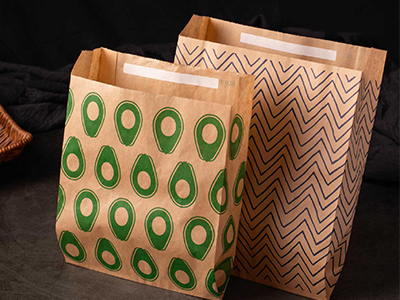
Secondly, environmental attributes are crucial. Oil-resistant paper bags fall under environmentally friendly packaging, so designs must use biodegradable materials like 100% recycled paper to ensure they qualify as biodegradable packaging. From raw material selection to production processes, carbon reduction principles must be upheld to avoid compromising environmental performance through excessive processing, thereby meeting consumers' growing demand for green packaging.
Furthermore, structural rationality impacts practicality. As a subcategory of paper bag packaging, the structural design of oil-resistant paper bags must balance load-bearing capacity and portability. For example, the bottom can use reinforced sealing to enhance load-bearing capacity, while the sides can have pre-creased folds for easy folding and storage. For takeaway scenarios, handles or tear-open features can be designed to enhance user experience. If used for courier scenarios, compatibility with courier packing bags must also be considered to ensure they do not easily tear during stacked transportation.
Additionally, printing and customisation compatibility are critical. Businesses often use packaging to convey brand information, so designs must select paper materials suitable for food-grade ink to ensure clear, durable printing patterns. Additionally, sufficient printing space should be reserved to support customisation of dimensions, logos, and product descriptions according to customer needs, while maintaining brand consistency and not compromising the performance of the oil-resistant layer.
Finally, cost control is a key design consideration. While meeting the above requirements, material usage and production processes should be optimised. For example, lightweight base paper can be used to reduce raw material costs, and standardised moulds can be employed to minimise customisation waste. Guangdong Guowei Guanli New Materials Co., Ltd., with its mature technology, can reduce costs while ensuring the performance of oil-resistant paper bags, making the product both environmentally friendly and economical.
In summary, the design of oil-resistant paper bags must strike a balance between oil resistance, environmental friendliness, structural rationality, printability, and cost control to create practical packaging products that meet market demand and help various industries achieve green packaging upgrades.